Explore Top 10 Steps to Build a Social Media Content Plan That Actually Works (2025 Guide)
Every brand wants to stay consistent on social media. But when it’s time to post, most teams are staring at a blank calendar—or worse, scrambling for last-minute ideas. It’s not that they don’t have anything to say. It’s that they don’t have a plan. That’s where a social media content plan makes all the difference. It’s not just about scheduling posts ahead of time—it’s about having a clear direction. Knowing what you’re sharing, why you’re sharing it, and who it’s meant for.
Whether you’re running a business account or managing multiple platforms for clients, a well-thought-out plan helps you stay focused, save time, and actually connect with your audience.
In this guide, we’ll walk through exactly how to create a social media content strategy that’s practical, flexible, and built to work in 2025.
Let’s start with the basics.
What Is a Social Media Content Plan (and Why It Matters in 2025)?
A social media content plan is your brand’s roadmap for creating, posting, and managing content across social platforms.
It defines what you’ll post, where you’ll post it, and why it matters to your audience.
In 2025, when attention spans are shrinking and competition is rising, having a strong content plan is no longer optional — it’s the difference between being seen and being ignored.
Unlike a social media content calendar, which focuses on scheduling posts, a content plan sets the overall direction — your goals, messaging, and target audience.
For businesses, where online engagement is growing rapidly, a well-structured content plan helps you stay consistent, connect with your audience, and convert followers into loyal customers.
A good plan usually includes:
- A social media content calendar with scheduled posts
- A mix of original and curated content
- Topics and formats tailored to your audience
- Posts that support your broader social media plans
Your content plan works best when it’s part of a larger social media editorial calendar—a structured content system that helps your team plan across campaigns, platforms, and channels. Using the right content calendar software also makes this process more collaborative and efficient.
Why is a social media content plan important in 2025?
In 2025, the biggest challenge is knowing what to post, when, and why, not having content. Audiences are spread across platforms, and content types are evolving rapidly, so a social media content plan helps manage this complexity. It transforms scattered efforts into a structured content planning workflow, making content creation manageable, timelines clear, and every post has a purpose.
So leave the comfort zone and start implementing a social media content plan.
1. It helps you compile and schedule content efficiently.
Planning ahead allows you to group content tasks—writing, design, or editing—into focused work sessions. This makes the process faster and more manageable. It’s especially effective when used with content scheduling tools.
Instead of bouncing around ideas day-to-day, you can:
- Write multiple comments on a single topic
- Set up platform-specific formats all at once
- Keep up with content demand without getting overwhelmed
2. You can repurpose content more effectively
A plan gives you a clear view of what’s been created and what can be reused. A successful video can become a tweet thread, a quote card, or part of a longer YouTube video.
By incorporating repurposing into your planning:
- Fewer ideas are wasted
- Reduced duplicate content creation
- Messages stay consistent across platforms
It’s a smarter way to expand reach without duplicating effort. Many brands are incorporating content repurposing strategies into their monthly workflow to improve efficiency.
3. Stay on top of seasonal campaigns and events
When you plan content in advance, you’re ready for more than just daily posts. You’re prepared for product launches, industry events, and key dates that matter to your audience.
Social media calendars help you:
- Keep track of deadlines and avoid last-minute rushes
- Balance long-term campaigns with timely posts and trends
- Align internal teams (design, product, support) with shared schedules
4. Connect your daily content to larger goals
Don’t lose track of your posts and work without a plan. A structured approach connects each post—whether it’s a tip, a promotion, or a story—to clear objectives. This is the value of a unified social media content strategy.
This connection allows you to:
- Measure what works and improve over time
- Stay consistent with your overall marketing strategy
- Maintain content that is purposeful rather than merely effective
How to Create a Social Media Content Plan Step by Step
You should know that building a structure that supports your business goals, appeals to the right audience, and keeps your team engaged day after day, across every platform, is crucial. It’s not just about creating a social media content plan and choosing the content to post. Each step in this process helps you move from guesswork to clarity and becomes an essential part of developing a broader social media content plan.
Let’s start from the beginning.
1. Set Clear Goals
To create an effective social media content plan, start by setting clear goals. Whether you’re planning social media content for a small business or an established store, these goals should directly relate to what your business truly wants to achieve. Maybe it’s increasing brand awareness, driving traffic, attracting leads, or building a stronger online community.
Instead of posting just to stay active, your content should have a purpose. And that starts with knowing what you want to achieve.
Here’s how:
A. Align Goals with Business Objectives
Your social media plans shouldn’t be separate. If your company’s focus this quarter is lead generation, your social media content should support that—with posts that educate users, invite them to sign up, or attract them to landing pages. If your goal is to increase brand awareness, reach, impressions, or follower growth should be the focus.
B. Choose Key Performance Indicators (KPIs) that Align with Your Goal
KPIs are how you’ll measure the effectiveness of your content. They should be specific and trackable. Here are some examples:
- If your goal is to increase brand awareness, Use metrics like reach, impressions, follower growth, or brand mentions.
- If your goal is engagement, Focus on likes, comments, shares, saves, and click-through rates.
- If your goal is to increase traffic or conversions, Track referral visits, sign-ups, or purchases from social media posts.
These KPIs also help you plan your future social media editorial schedules.
2. Define your ideal customer profile (ICP)
If your content is geared toward everyone, it rarely gets traction. Therefore, defining your ideal customer profile (ICP) is one of the most important steps in building a social media content plan. Knowing who you’re targeting makes it easier to determine what you’ll say, how you’ll say it, and where you’ll appear.
The ideal customer profile (ICP) sets the tone for your message and helps you avoid vague, one-size-fits-all content and focus on posts that address real needs and habits—an essential part of your content planning workflow.
A. How do you create your ideal customer profile?
To create your ICP, start by gathering data from a few key sources:
- Customer surveys: Ask current buyers about their preferences, challenges, and habits.
- Social media analytics: Use platform analytics to learn about your followers—age, location, activity patterns, and more.
- Website Analytics: See who visits your site, what pages they read, and where they come from.
- Sales and Support Data: Connect with your sales or customer service team—they often have real conversations that reveal what matters to your audience.
Then look for patterns. Do your best buyers typically belong to a specific niche? Do they follow specific influencers? Do they ask the same types of questions in comments or direct messages?
You can also use tools to speed up this process—some of which collect audience insights directly from social media platforms or help automatically map buyer behavior. We’ll cover some of these later in the article.
To understand this better:
Imagine you’re managing the social media for a skincare brand with science-backed products designed for acne-prone skin. Here’s how your Ideal Customer Profile (ICP) might look:
- 👩💼 Demographic: Women aged 18–35 living in urban areas
- 🧴 Product Preference: Buyers who choose natural and dermatologically tested products
- 📱 Influence Source: People who follow dermatologists and beauty creators on Instagram or YouTube
- 📚 Content Behavior: Users who engage with educational content about ingredients, not just product promotion
With this kind of clarity, you can:
- Choose platforms where this audience is active
- Write captions that address their real concerns
- Post formats they trust—like reels with ingredient explainers or testimonials
- Avoid wasting time on content that doesn’t align with what they care about
This kind of alignment makes your social media content calendar far more intentional.
3. Audit Existing Content
Before creating new content, it’s smart to step back and look at what you’ve already shared. A social media audit helps you understand what’s working, what isn’t, and where the gaps are. This step informs both your marketing calendar and long-term content repurposing strategy.
Start by gathering your recent posts from all platforms. Then review:
- Top-performing content: Which posts had the most engagement, reach, or clicks? Look for patterns in format, topic, or timing.
- Underperforming content: What didn’t land—and why? Sometimes it’s the timing, sometimes it’s the message, and sometimes it just didn’t suit the platform.
- Gaps in your content mix: Are you missing key topics your audience cares about? Are you over-posting one type of content and ignoring another?
This step helps you move forward with clarity. Instead of guessing what to post next, you’re building on real insights.
A content audit also supports long-term planning. You’ll find posts worth repurposing, topics worth expanding, and patterns that help you plan smarter—especially if your plan includes multiple platforms and content types in a single social media content calendar.
4. Choose the Right Platforms
Choosing the right social media platforms isn’t just a box to tick—it shapes how your content connects. Every platform has its own pace, personality, and purpose. The goal isn’t to be everywhere; it’s to be where your audience already is, and speak their language once you get there.
Platform fit is a critical factor in any social content planner. Here’s a quick breakdown to help you align your goals, audience, and content formats:
- Instagram: Ideal for visual-first content like reels, product showcases, before-and-after transformations, and behind-the-scenes stories. If your brand thrives on lifestyle, aesthetics, or community, create an effective content plan for Instagram and Facebook as they go hand in hand.
- Facebook: Still powerful for reaching wide age ranges and building communities. Best for sharing a mix of formats—photos, videos, events, and longer captions. Facebook Groups also offer strong engagement for niche audiences and local businesses.
- LinkedIn: Best suited for B2B brands, professional services, and thought leadership. Great for sharing industry insights, carousel explainers, employee highlights, or lead-generation content with a strategic edge.
- TikTok: Fast-moving and trend-driven, TikTok works well for raw storytelling, bite-sized tips, and community-driven challenges. If your audience leans younger or prefers informal content, this is worth testing.
- X (Twitter): Strong for real-time content—event coverage, quick thoughts, curated links, and conversational threads. It’s a good platform for brands that want to stay active in ongoing industry or cultural conversations.
- YouTube: Built for longer-form, evergreen content like tutorials, product deep dives, or case studies. If your content strategy includes education or storytelling, YouTube brings strong long-term value.
Start with one or two platforms. Over time, grow your social posting schedule to include additional platforms if needed.
5. Plan Content Themes and Topics
Once you’ve picked your platforms, the next step is deciding what to actually post. Without a clear set of content themes, it’s easy to end up with a feed that feels scattered—or worse, repetitive. Themes give your content structure. They also help your audience know what to expect from you over time.
But here’s the thing—coming up with themes isn’t about picking a few random categories. It takes thought, creativity, and some real connection to what your brand stands for and what your audience cares about.
Your content themes are one of the most important anchors in your social media content strategy. They also make it easier to build an ongoing social media content calendar that doesn’t feel like a guessing game.
Here’s how to start…
A. Start with your core message
What’s one thing you want your audience to walk away with after engaging with your content? Maybe it’s that your product makes their routine easier. Maybe it’s that you’re the go-to source for expert tips in your industry. Write that down first—it’ll anchor every theme you create.
B. Brainstorm based on three angles:
- What does your audience need or want to learn?
Look through comments, FAQs, and competitor posts. What are people asking about? What pain points do they keep mentioning?
- What does your brand believe in?
Do you stand for sustainability? Simplicity? Empowerment? Translate that into content. If you believe in transparency, maybe a recurring theme becomes “behind the product.”
- What moments matter in your customer’s journey?
Are there key decisions or habits you help with—like buying a first home, managing stress, or finding the right skincare routine? Each of those can be turned into a theme that connects with where they are right now.
This method works across different social media content calendars and helps shape your entire content planning workflow.
To understand this better:
Let’s say you manage content for a home office furniture brand. Here’s how a few content themes might work together:
- 🧠 Work Smarter: Productivity tips, ergonomic advice, space planning ideas
- 🖼️ From Our Customers: Real office setups, before-and-after photos, testimonials
- 🛠️ Behind the Design: Materials used, design decisions, quality testing
- 🏡 At-Home Stories: Profiles of remote workers and how they’ve built their spaces
Instead of creating content from scratch each week, you now have repeatable lanes to explore. These themes can rotate, evolve, or run as series—and feed into your wider social media editorial calendar.
6. Create a Content Calendar
A content calendar turns all your planning into something you can act on. It helps you map out what to post, when, and where—so you’re not stuck guessing the night before or missing key dates and campaigns.
At this point, you’ve already decided on your platforms, themes, and goals. Now it’s about bringing it all together in a structure you can stick to—whether that’s three posts a week or daily across multiple channels.
You don’t need to schedule everything months in advance. But having at least a two-week view helps you stay ahead and gives space for better creative planning.
A. Implement the 5:3:2 Content Rule
If you’re unsure how to balance your content types, the 5:3:2 rule is a simple framework that keeps your feed varied, valuable, and engaging.
For every 10 posts:
- 5 posts should be curated content from trusted external sources—industry news, useful tips, or content your audience will appreciate even if it’s not your own.
- 3 posts should be original, valuable content created by your brand—like how-tos, insights, or behind-the-scenes moments.
- 2 posts should be more personal or brand-centric—content that humanizes your brand, shows personality, or tells a story.
This mix helps keep your feed informative without being overly promotional, and gives your audience a reason to keep following along.
Not always—and that’s okay. The 5:3:2 rule is a great starting point, but it’s not universal.
Some industries need more original content (like creators or coaches), while others thrive on curated posts (like media or tech brands).
🧴 For example:
A skincare brand launching new products monthly might need a 6:3:1 or 7:2:1 ratio—focused more on tutorials, product demos, and behind-the-scenes content.
Instead of exact numbers, ask:
- ✅ Are you sharing real value regularly?
- ✅ Can your audience connect with your brand?
- ✅ Are you balancing information with personality?
Tweak the ratio to fit your audience, your goals, and your bandwidth. It’s a guide—not a rulebook.
B. Emphasize Video Content
In 2025, video content continues to outperform almost every other format. Whether it’s short-form reels, live sessions, or product explainers—video drives reach, engagement, and retention.
But you don’t need a big production budget to make it work. What matters more is clarity, relevance, and pacing.
To get started:
- Repurpose existing blogs or carousels into short video scripts
- Use simple editing tools like CapCut, Canva, or Instagram’s in-app tools
- Keep intros tight—your first 3 seconds decide whether people keep watching
- Add captions and mobile-friendly layouts so it works without sound
Use your content calendar to map out regular video posts—whether it’s once a week or once per theme. Over time, video becomes a natural part of your planning, not an afterthought.
7. Make Sure Your Social Media Profiles Are Fully Set Up
Before you post anything, take a moment to check whether your profiles are actually ready to support your content. It sounds basic—but a lot of brands skip this and lose trust before they even show up in someone’s feed.
Your social media presence isn’t just built through content—it also lives in the quiet details: your bio, your profile image, your pinned posts. These are often the first touchpoints people have with your brand.
Here’s a quick checklist to get your profiles audit-ready:
- Consistent branding: Use the same logo, brand colors, and tone across platforms. You don’t have to be identical, but you do need to feel cohesive.
- Updated bios: Your bio should say what you do, who it’s for, and ideally include a link (to your site, product, newsletter, etc.). Keep it short, specific, and aligned with your voice.
- Contact info and CTAs: Add relevant links, email buttons, or location info depending on the platform. Make it easy for someone to take the next step.
- Pinned content or highlights: Showcase your best work, most useful post, or something that introduces your brand. Give new visitors something valuable right away.
- Switch to a business or professional account: On platforms like Instagram or Facebook, this unlocks features like analytics, contact buttons, and access to Meta Business Suite. If you haven’t linked your accounts yet, doing so helps with scheduling and tracking across platforms.
A clean, intentional profile builds trust. When someone lands on your page, they should know—instantly—what you do and why it matters.
8. Build a Promotion Plan Around Every Post
Creating great content is only half the job. If you want people to see it, engage with it, and share it, you need a simple but clear content promotion strategy behind the scenes.
Instead of publishing a post and hoping it picks up traction, treat distribution like part of the creative process. Every piece of content should have a plan—where it’s going, how it’ll be shared, and who it’s meant to reach.
Some ways to promote smarter, not louder:
- Repurpose across formats: Turn a blog post into a Twitter thread. Slice a YouTube video into Instagram reels. Pull a stat into a LinkedIn graphic. Repetition isn’t boring when the format changes.
- Use internal channels: Share content through your email list, Slack community, or website homepage. If you’re already talking to people, don’t let that traffic go unused.
- Amplify through partnerships: Ask collaborators, influencers, or team members to reshare or react to content. Sometimes a simple quote or tag brings more reach than paid ads.
- Schedule with intent: Don’t post at random. Use platform insights to figure out when your audience is most active, and time your distribution accordingly.
The best content often doesn’t “go viral.” It gets shared deliberately—by people who found it useful, well-timed, or relevant.
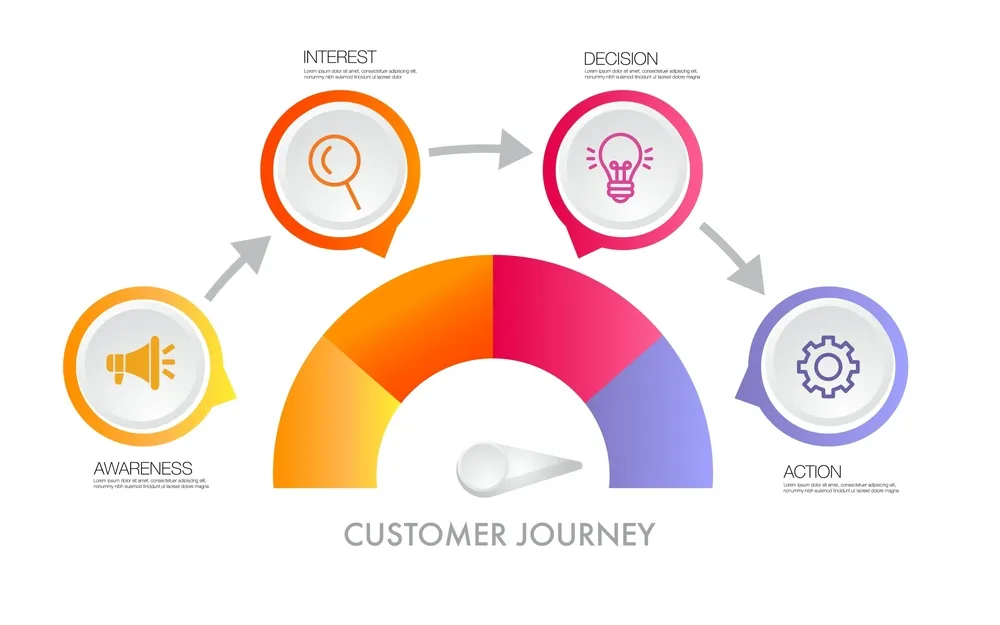
9. Match Your Content to Where Your Audience Is in Their Journey
Not everyone who sees your content is in the same mindset. Some are just getting to know your brand. Others are comparing you to a competitor. A few are already thinking about buying. That’s why your content shouldn’t all do the same thing—it needs to speak to people at different stages of their buyer journey.
Think of your content like a path. At the top, you’re building awareness. In the middle, you’re helping people evaluate. At the bottom, you’re guiding action.
10. Monitor Performance and Adjust
No content plan is complete without a feedback loop. If you’re not checking how your posts are performing, you’re just guessing. And in most cases, guessing leads to wasted effort.
Social media analytics tell you what’s resonating, what’s being ignored, and what deserves more attention. But it’s not just about likes or views—it’s about figuring out what moves your audience closer to your goals.
What to track:
- Engagement rate: Likes, comments, shares, saves—these tell you how people are interacting with your content in real time. You can use social media analytics tools for this.
- Reach and impressions: Helpful for seeing how wide your content is spreading. If these numbers dip, your content or timing might need a shift. You can use social listening tools for this.
- Click-throughs and conversions: These show how your content performs when it comes to driving real action—sign-ups, sales, downloads, or link visits. Also, don’t hesitate to explore SmartSheet alternatives for streamlined data management and analysis.
How to use what you learn:
- Look at trends monthly—not just post-by-post
- Double down on what’s working (themes, formats, tone)
- Rework or drop what’s underperforming
- Test something new once a week—different visuals, different CTA, different caption style
The best content strategy isn’t set once. It evolves. And the more you pay attention to performance, the faster you’ll know what actually works for your brand.
3 Simple Templates to Help You Build Your Social Media Content Plan
Planning content gets a lot easier when you’re not starting from scratch every week. Templates take the pressure off, help you stay consistent, and make it easier to spot what’s missing—before your feed goes quiet.
Below are three useful social media content planning templates to help you organize, track, and improve your process without overcomplicating it.
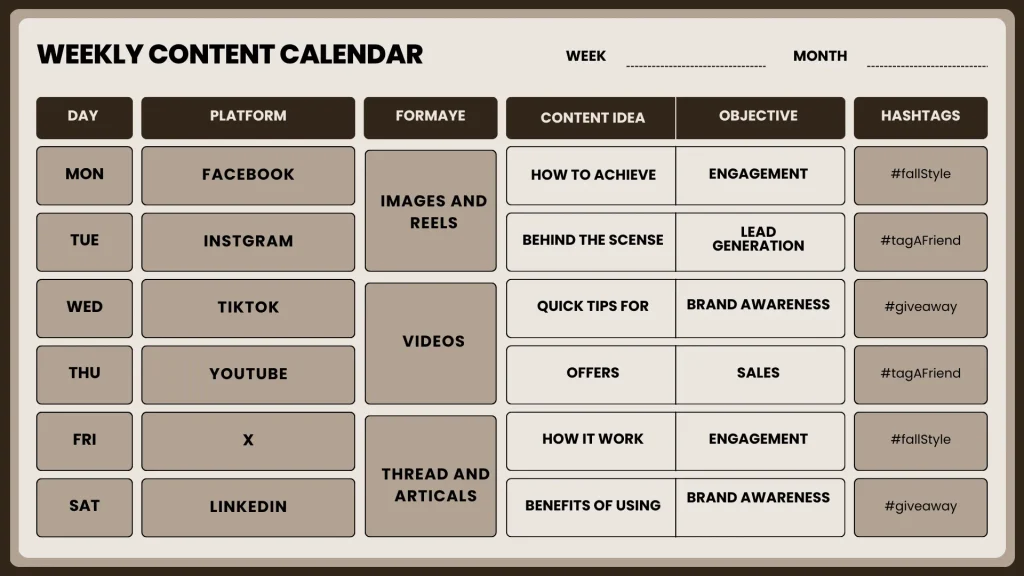
1. Weekly Content Calendar Template
Weekly Social Media Content Calendar Template is your go-to view for the daily posting week ahead. It lets you plan what you’re posting every day of the week, where it’s going, and what goal it supports—so you’re not scrambling last minute.
What to include:
- Date and day
- Platform (Instagram, LinkedIn, etc.)
- Post format (reel, carousel, story, etc.)
- Caption or content idea
- Media placeholder (image or video)
- Goal (awareness, engagement, conversion)
2. Monthly Content Theme Tracker
A weekly view helps with execution. A monthly view enables you to step back and see the bigger picture.
This template lets you plan your content by theme, ensuring your messaging stays balanced and aligned with what your audience actually cares about. It’s also helpful for planning around seasonal campaigns, product launches, or brand events.
What to track:
- Monthly themes or campaigns
- Core content pillars used each week
- Gaps in your messaging (too many promos? not enough education?)
- Notes for improvement
Monthly social media content calendar example:
If you’re ever stuck wondering, “What should we post next week?”—this tracker will usually have the answer.
3. Platform-Specific Templates
Every platform has its own strengths—and posting the same thing everywhere rarely works. These templates help you shape content that fits the tone, format, and behavior of each platform.
How to use them:
- Instagram template: Track reels, carousels, stories, and captions with a space for trending audio or hashtags
- LinkedIn template: Log article ideas, carousel post topics, and personal story angles
- Twitter/X template: Plan out threads, quick stats, or opinion posts
- YouTube template: Map longer-form video scripts, hook ideas, CTAs, and thumbnail concepts
Even if you use a scheduling tool, having these templates helps during brainstorming and content creation. They give structure without locking you in—and they keep you focused on what works best on each platform.
6 Tools to Make Planning Easier
Even with great ideas and clean templates, managing content across platforms can get messy fast. That’s where the right social media planning tools step in—not to replace strategy, but to help you stay organized, track performance, and make execution smoother.
All you need to do is find the right social media management tools that work with your style and workflow.
Here are a few that are worth exploring:
- Notion: Great if you want flexibility. You can build your own content calendar, brainstorm post ideas, and even track analytics—all in one space. Best for solo creators or small teams who want control without a lot of tech.
- Trello: A visual tool that works well if you like drag-and-drop planning. Think of it like digital sticky notes—move your posts across stages like “Idea,” “In Progress,” “Scheduled,” and “Live.”
- Google Sheets: Still one of the most popular tools for content planning. It’s simple, collaborative, and easy to customize. Use it as your editorial calendar, your theme tracker, or even your hashtag vault.
- Buffer: A user-friendly social media scheduling tool that lets you plan and publish across multiple platforms. You can preview how posts will look, set up time slots, and see performance data without leaving the app.
- Later: Especially strong for visual-first platforms like Instagram and Pinterest. Later helps you map out your grid, preview posts, and use saved captions or media for faster scheduling.
- Sprout Social: A more robust social media management platform for brands and growing teams. It offers everything from publishing and scheduling to analytics, team roles, and social listening.
These tools won’t make your content better, but they’ll make it easier to stay consistent, collaborate with others, and improve what’s working without losing time to manual tasks. Apart from these there are many free apps to manage social media content plans as well you can use if you have a small business.
Pick one that fits how you think and work, not just what’s trending.
Conclusion
A good social media content plan doesn’t just make your life easier—it gives your brand consistency, purpose, and room to grow. Whether you’re working solo or managing a team, having a clear structure means you’re not posting just to fill space—you’re posting with intention.
Start with a plan that fits your goals, your audience, and your capacity. Keep it flexible. Keep it real. And don’t forget to revisit and refine as you learn what works.
If you need to hire one of the largest advertising agencies in Egypt, don’t hesitate to contact Marketing House.