A marketing strategy is a long-term plan that defines how a business will reach its target audience, communicate its value, and achieve specific marketing goals. Different types of marketing strategies exist — from digital and traditional channels to growth frameworks like market penetration and product development — each tailored to different business needs, budgets, and markets. For businesses in Egypt and the MENA region, choosing the right mix of strategies can significantly enhance engagement, build brand trust, and drive measurable conversions. This guide covers the main types of marketing strategies, with detailed real-world examples you can apply to your own business.
What Is a Marketing Strategy?
A marketing strategy is a comprehensive plan designed to promote and sell products or services. It identifies target audiences and outlines tactics to reach them.
- Purpose: Guides marketing efforts to achieve business goals.
- Components: Includes market research, target audience identification, and competitive analysis.
- Result: A well-defined pathway for reaching business objectives.
Marketing Strategy vs Marketing Plan
A marketing strategy defines your overall approach, while a marketing plan outlines specific actions to execute this strategy.
- Marketing Strategy: Long-term vision focusing on goals.
- Marketing Plan: Short-term tactics that detail how to achieve those goals.
- Integration: Effective plans stem from solid strategies.
Marketing Strategy vs Marketing Tactics
Marketing strategy is the overarching plan, whereas tactics are the specific actions taken within that plan.
- Strategy: High-level vision guiding marketing efforts.
- Tactics: Day-to-day actions, such as promotions or specific campaigns.
- Example: A strategy may focus on social media, while a tactic could be a specific post.
What Are the different types of marketing strategy with examples?
Digital Marketing Strategies
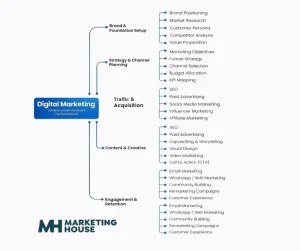
Digital marketing strategies leverage online platforms to reach customers effectively.
- Examples: SEO, PPC, social media marketing, and content marketing.
- Benefits: Cost-effective, highly measurable, and scalable.
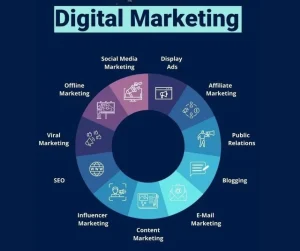
For a full breakdown of each channel, see our guide on what is the type of digital marketing.
Traditional Marketing Strategies
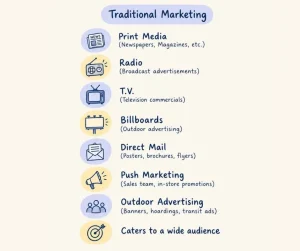
Traditional marketing involves offline promotions aimed at broad audiences.
- Examples: TV ads, radio spots, print media.
- Benefits: Wide reach and brand recognition.
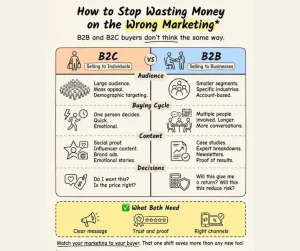
B2B Marketing Strategies
B2B marketing focuses on selling products or services from one business to another.
- Examples: Account-based marketing and LinkedIn marketing.
- Benefits: Builds long-term relationships and repeat business.
B2C Marketing Strategies
B2C marketing targets individual consumers with strategies that appeal directly to their needs.
- Examples: Influencer marketing and loyalty programs.
- Benefits: Personalizes customer experience and increases consumer loyalty.
Growth Marketing Strategies
Growth marketing focuses on rapid testing and scaling marketing channels to drive revenue.
- Examples: Market penetration and product development strategies.
- Benefits: Agile response to market changes and growth-oriented.
Relationship Marketing Strategies
Relationship marketing aims to foster long-term customer engagement rather than focusing solely on sales.
- Examples: Community marketing and customer loyalty programs.
- Benefits: Generates repeat customers and enhances brand value.
Creative Marketing Strategies
Creative marketing leverages unique ideas to capture attention and engage consumers.
- Examples: Guerrilla marketing and experiential marketing campaigns.
- Benefits: Differentiates brand and creates memorable experiences.
Cost Leadership Strategy
Cost leadership focuses on becoming the lowest-cost producer in the market to win price-sensitive customers.
- Example: Streamlining production and distribution to offer the most competitive pricing in the category.
- Benefits: Attracts a wide customer base and builds volume-based profitability.
Differentiation Strategy
Differentiation focuses on offering unique value that competitors don’t provide, rather than competing on price.
- Example: Premium quality, exclusive features, or a distinctive brand experience.
- Benefits: Builds brand loyalty and reduces price sensitivity.
Focus Strategy
A focus strategy concentrates marketing efforts on a specific, narrow market segment instead of the whole market.
- Example: Tailoring products and messaging exclusively to a niche audience.
- Benefits: Builds deep expertise and strong loyalty within that niche.
Digital Marketing Strategies With Examples
SEO Marketing Strategy
SEO focuses on optimizing websites to rank higher in search engine results, driving organic traffic.
- Example: Keyword optimization and backlinking.
- Benefits: Improves visibility and credibility.
Marketing House is a leading SEO Services Company that can help you put this strategy into practice.
PPC Marketing Strategy
PPC (Pay-Per-Click) advertising involves paying for ads that appear on search engines and websites.
- Example: Google Ads campaigns.
- Benefits: Immediate visibility and measurable results.
Social Media Marketing Strategy
Social media marketing utilizes platforms like Facebook and Instagram to engage audiences.
- Example: Regular posting and targeted advertising.
- Benefits: Direct interaction with consumers, enhanced brand loyalty.
Content Marketing Strategy
Content marketing involves creating valuable content to attract and retain customers.
- Example: Blogs, whitepapers, and infographics.
- Benefits: Establishes authority and drives traffic.
Email Marketing Strategy
Email marketing targets potential and existing customers through personalized communication.
- Example: Newsletters and promotional campaigns.
- Benefits: Cost-effective and measurable engagement.
Video Marketing Strategy
Video marketing utilizes engaging video content to promote products and services.
- Example: Product demos and testimonials.
- Benefits: Captivates audience and increases understanding.
Influencer Marketing Strategy
Influencer marketing partners with individuals who have a significant following to promote products.
- Example: Collaborations on social media.
- Benefits: Builds trust and extends reach.
Affiliate Marketing Strategy
Affiliate marketing involves partnering with affiliates to promote products for commission.
- Example: Affiliates sharing links and earning a percentage of sales.
- Benefits: Cost-effective and extends marketing reach.
AI-Assisted Marketing Strategy
AI-assisted marketing uses artificial intelligence tools to personalize content, automate customer conversations, and optimize campaigns in real time.
- Example: AI-powered chatbots and dynamic email personalization based on browsing behavior.
- Benefits: Faster execution, deeper personalization, and continuously optimized ad spend.
Traditional Marketing Strategies With Examples
Television Advertising Strategy
Television ads communicate brand messages to a mass audience efficiently.
- Example: Primetime commercials during popular shows.
- Benefits: High reach and visual storytelling.
Radio Advertising Strategy
Radio advertising effectively reaches local audiences through audio messaging.
- Example: Sponsorship of local shows or segments.
- Benefits: Cost-effective and targeted at a specific demographic.
Print Marketing Strategy
Print marketing involves tangible materials like brochures and flyers to engage customers.
- Example: Local magazines or newspapers.
- Benefits: Lasting impressions and targeted distribution.
Outdoor Advertising Strategy
Outdoor advertising promotes brands through billboards and posters in high-traffic areas.
- Example: Billboards near major roads.
- Benefits: High visibility and continuous exposure.
Direct Mail Marketing Strategy
Direct mail involves sending physical promotional materials to consumers’ mailboxes.
- Example: Catalogs or promotional postcards.
- Benefits: Personalized approach and measurable responses.
Event Marketing Strategy
Event marketing engages customers through meetings, conferences, or expos.
- Example: Trade shows or product launches.
- Benefits: Networking opportunities and brand visibility.
B2B Marketing Strategies With Examples
Account-Based Marketing Strategy
Account-based marketing targets specific high-value accounts with personalized strategies.
- Example: Customized marketing campaigns for top clients.
- Benefits: Higher ROI and strengthened client relationships.
LinkedIn Marketing Strategy
LinkedIn marketing capitalizes on professional networking to reach business audiences.
- Example: Content-sharing and targeted ads.
- Benefits: Access to key decision-makers.
B2B Content Marketing Strategy
B2B content marketing provides valuable information tailored to business audiences.
- Example: Whitepapers and industry reports.
- Benefits: Establishes authority and builds trust.
Email Lead-Nurturing Strategy
Email lead-nurturing focuses on guiding potential customers through the buying process.
- Example: Automated email sequences providing educational content.
- Benefits: Increases conversions and retention.
Partnership Marketing Strategy
Partnership marketing collaborates with other businesses to expand reach and resources.
- Example: Co-branded products or services.
- Benefits: Leverages combined strengths for mutual growth.
B2C Marketing Strategies With Examples
Social Commerce Strategy
Social commerce integrates e-commerce with social media to facilitate shopping experiences.
- Example: Shopping directly through Instagram posts.
- Benefits: Enhances user engagement and simplifies purchasing.
Influencer Marketing for B2C Brands
Influencer marketing for B2C brands employs popular social media figures to promote products directly to individual consumers.
- Example: Product endorsements on YouTube or Instagram.
- Benefits: Builds brand credibility and engages niche audiences.
Promotional Marketing Strategy
Promotional marketing focuses on time-limited offers to encourage purchases.
- Example: Holiday sales or flash discounts.
- Benefits: Drives immediate sales and customer interest.
Loyalty Marketing Strategy
Loyalty marketing aims to foster long-term relationships through rewards programs.
- Example: Customer reward points systems.
- Benefits: Enhances repeat business and customer retention.
User-Generated Content Strategy
User-generated content encourages customers to create content around a brand.
- Example: Customer reviews and social media photos.
- Benefits: Increases engagement and authenticity.
Growth Marketing Strategies With Examples
Market Penetration Strategy
Market penetration focuses on increasing market share in existing markets.
- Example: McDonald’s global “I’m Lovin’ It” campaign used a catchy jingle and aggressive advertising — not a new menu — to win customers from competitors and increase visit frequency among existing fast-food consumers.
- Benefits: Boosted sales while maintaining current offerings.
Market Development Strategy
Market development targets new markets for existing products.
- Example: Nike originally sold running shoes almost exclusively to athletes, then successfully expanded into the lifestyle, fashion, and streetwear markets with the same core product line.
- Benefits: Increased customer base and revenue opportunities.
Product Development Strategy
Product development involves creating new products to meet customer needs.
- Example: Apple releases new iterations of the iPhone, Apple Watch, and MacBook every year, giving its loyal existing customer base a reason to keep upgrading within the same ecosystem.
- Benefits: Attracts existing customers and enhances market position.
Diversification Strategy
Diversification minimizes risks by entering new markets with new products.
- Example: Amazon started strictly as an online bookstore, then diversified into a completely different B2B market by launching Amazon Web Services (AWS) for cloud computing.
- Benefits: Reduces dependency on a single revenue source.
Referral Marketing Strategy
Referral marketing encourages existing customers to refer new clients.
- Example: Incentive-based referral programs.
- Benefits: Low-cost user acquisition through trust.
Relationship Marketing Strategies With Examples
Customer Retention Strategy
Customer retention strategies focus on keeping existing customers engaged and satisfied.
- Example: Personalized offers based on purchase history.
- Benefits: Reduces churn and increases customer lifetime value.
Conversational Marketing Strategy
Conversational marketing engages customers in real-time conversations to facilitate sales.
- Example: Chatbots on websites offering immediate assistance.
- Benefits: Enhances customer experience and quickens decision-making.
Community Marketing Strategy
Community marketing fosters brand loyalty by creating customer communities.
- Example: Online forums or groups for brand advocates.
- Benefits: Enhances customer engagement and feedback.
Customer Loyalty Strategy
Customer loyalty strategies reward frequent customers to encourage repeat business.
- Example: Loyalty cards offering discounts for repeat purchases.
- Benefits: Establishes long-term customer relationships.
Word-of-Mouth Marketing Strategy
Word-of-mouth marketing leverages customer recommendations to promote products.
- Example: Encouraging satisfied customers to share experiences.
- Benefits: Builds credibility and attracts new customers organically.
Creative Marketing Strategies With Examples
Guerrilla Marketing Strategy
Guerrilla marketing uses unconventional tactics for maximum impact at minimal costs.
- Example: Flash mobs or street art campaigns.
- Benefits: Captivating audience attention with memorable tactics.
Experiential Marketing Strategy
Experiential marketing engages customers through immersive experiences around the brand.
- Example: Pop-up shops or interactive brand installations.
- Benefits: Strengthens emotional connections with consumers.
Cause Marketing Strategy
Cause marketing aligns a brand with social causes to resonate with customers.
- Example: TOMS Shoes built its business model around the “One for One” campaign, donating a pair of shoes to a child in need for every pair sold.
- Benefits: Enhances brand perception and customer loyalty.
Scarcity Marketing Strategy
Scarcity marketing creates a sense of urgency to encourage purchases before a product runs out.
- Example: Limited-time offers or exclusive releases.
- Benefits: Drives immediate action from potential buyers.
Stealth Marketing Strategy
Stealth marketing subtly promotes products without appearing like traditional advertising.
- Example: Product placements in movies or shows.
- Benefits: Discreet introduction of products into consumer lives.
Local Marketing Strategies for Businesses in Egypt
Local SEO Strategy
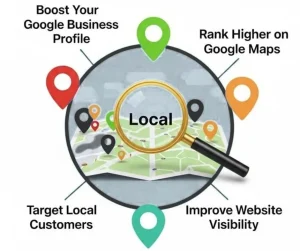
A local SEO strategy optimizes online presence for local search queries.
- Example: Google Business Profile optimization.
- Benefits: Attracts local customers actively searching for services.
Google Business Profile Strategy
Using Google Business Profile helps businesses appear in local searches and maps.
- Example: Updating business info and responding to reviews.
- Benefits: Enhances visibility and customer engagement.
Location-Based Marketing Strategy
Location-based marketing targets consumers based on their geographical location.
- Example: Geotargeted ads or mobile alerts.
- Benefits: Increases relevance and personalized engagement.
WhatsApp Marketing Strategy
WhatsApp marketing uses the messaging platform to engage customers directly.
- Example: Sending promotional messages and updates.
- Benefits: Direct communication and higher engagement rates.
Egyptian Arabic Content Strategy
Creating content in Egyptian Arabic allows businesses to connect culturally with local audiences.
- Example: Blogs and ads in local dialects.
- Benefits: Enhances relatability and customer connection.
City-Based Marketing Strategy
City-based marketing targets specific cities for localized campaigns and offers.
- Example: Promotions tailored for Cairo or Alexandria customers.
- Benefits: Maximizes relevance and effectiveness.
Marketing Strategies for E-commerce Businesses
E-commerce SEO Strategy
An e-commerce SEO strategy optimizes product pages for search engines to drive traffic.
- Example: Optimizing product descriptions and images.
- Benefits: Increased visibility and organic traffic.
Google Shopping Strategy
Google Shopping helps e-commerce businesses showcase products directly in search results.
- Example: Utilizing product listings with images and prices.
- Benefits: Boosts conversion rates and visibility.
Retargeting Strategy
Retargeting reminds previous website visitors of products they viewed to encourage purchases.
- Example: Display ads targeting past visitors.
- Benefits: Increases brand recall and conversions.
E-commerce Email Marketing Strategy
Email marketing for e-commerce fosters customer engagement and conversions.
- Example: Personalized product recommendations.
- Benefits: Enhances customer experiences and boosts sales.
Abandoned Cart Recovery Strategy
This strategy aims to recover sales lost due to cart abandonment.
- Example: Automated email reminders for items left in carts.
- Benefits: Increases sales and reduces customer drop-off.
Product Review Strategy
Encouraging product reviews enhances trust and provides social proof.
- Example: Incentivizing customers to leave feedback.
- Benefits: Increases product credibility and conversion rates.
Marketing Strategies for Small Businesses
Low-Budget SEO Strategy
A low-budget SEO strategy focuses on organic growth with minimal investment.
- Example: Keyword optimization and local listings.
- Benefits: Builds visibility without high costs.
Social Media Strategy
Developing a social media strategy helps engage customers on popular platforms.
- Example: Regular posts and customer interaction.
- Benefits: Increases brand awareness and engagement.
Small Business Referral Strategy
Small business referral marketing encourages existing customers to refer others.
- Example: Reward programs for successful referrals.
- Benefits: Cost-effective customer acquisition.
Local Advertising Strategy
Local advertising promotes small businesses through community engagement.
- Example: Ads in local newspapers or community events.
- Benefits: Increases visibility within the neighborhood.
WhatsApp Customer Follow-Up Strategy
Using WhatsApp for follow-ups enhances customer relationships and retention.
- Example: Sending post-purchase messages or inquiries.
- Benefits: Builds loyalty and enhances customer service.
How to Choose the Right Marketing Strategy?
Define Your Marketing Goals
Clearly defined goals guide decision-making and strategy development.
- Example: Increasing brand awareness or boosting sales.
- Benefits: Ensures focus and relevance in efforts.
Identify Your Target Audience
Understanding your audience is crucial for effective marketing strategies.
- Example: Segmenting your audience using the four main types of market segmentation — demographic, geographic, psychographic, and behavioral — to tailor messaging precisely.
- Benefits: Tailored marketing leads to better engagement.
Analyse Your Competitors
Competitive analysis helps identify market gaps and opportunities.
- Example: Assessing competitors’ strengths and weaknesses.
- Benefits: Informs strategy to stand out.
Choose the Right Marketing Channels
Selecting appropriate marketing channels maximizes reach and effectiveness.
- Example: Social media for B2C, LinkedIn for B2B.
- Benefits: Engages audiences where they are most active.
Set Your Marketing Budget
Establishing a budget guides which strategies can be effectively implemented.
- Example: Allocating funds for ads versus content creation.
- Benefits: Ensures financial resources are optimally utilized.
Create a Marketing Timeline
A marketing timeline outlines when to execute different strategies and campaigns.
- Example: Seasonal campaigns or product launches.
- Benefits: Keeps teams organized and focused.
Test and Improve Your Strategy
Regular testing and adjustments enhance the effectiveness of marketing strategies.
- Example: A/B testing for email campaigns.
- Benefits: Increases impact and ROI over time.
Marketing Strategy Examples for Businesses in Egypt
Marketing Strategy for Restaurants
Restaurants can utilize local SEO and social media marketing to attract customers.
- Example: Engaging local influencers to promote dining experiences.
- Benefits: Increases local traffic and online visibility.
Marketing Strategy for Real Estate Companies
Real estate agencies can leverage social media ads and virtual tours to engage clients.
- Example: Hosting online open houses.
- Benefits: Expands audience reach and enhances selling potential.
Marketing Strategy for Clinics
Clinics can utilize email marketing and community engagement to attract patients.
- Example: Offering health webinars or newsletters.
- Benefits: Builds authority and informs patients about services.
Marketing Strategy for E-commerce Stores
E-commerce businesses should focus on SEO, retargeting ads, and social proof through reviews.
- Example: Leveraging Google Shopping ads.
- Benefits: Enhances visibility and purchase likelihood.
Marketing Strategy for Education Businesses
Educational institutions can utilize content marketing and social media to reach potential students.
- Example: Creating informative blogs and videos.
- Benefits: Establishes thought leadership and increases enrollment.
Marketing Strategy for B2B Companies
B2B strategies should include LinkedIn marketing and account-based approaches to target specific companies.
- Example: Tailored email campaigns for business decision-makers.
- Benefits: Increased engagement and conversion rates.
How to Measure Marketing Strategy Performance?
Website Traffic
Website traffic indicates the effectiveness of online strategies.
- Metric: Use analytics tools to track visitors.
- Benefits: Identifies successful channels and areas for improvement.
Engagement Rate
Engagement rate measures how audiences interact with content.
- Metric: Likes, shares, and comments on social media.
- Benefits: Reflects the effectiveness of content strategies.
Leads and Conversions
Tracking leads and conversions indicates the success of marketing efforts in generating business.
- Metric: Number of inquiries or sales made.
- Benefits: Directly correlates with ROI.
Customer Acquisition Cost
Calculating customer acquisition cost helps evaluate the efficiency of marketing budgets.
- Metric: Total marketing costs divided by the number of new customers.
- Benefits: Ensures cost-effectiveness in attracting new clients.
Return on Ad Spend
Return on ad spend measures the revenue generated from advertising efforts.
- Metric: Revenue from ads divided by the cost of ads.
- Benefits: Assesses the direct financial impact of marketing investments.
Customer Lifetime Value
Customer lifetime value estimates the total revenue derived from a customer over their relationship with the business.
- Metric: Average purchase value times purchase frequency.
- Benefits: Guides long-term business strategy.
Revenue by Marketing Channel
Assessing revenue by marketing channel identifies which channels yield the best ROI.
- Metric: Track sales by channel data.
- Benefits: Optimizes budget allocation.
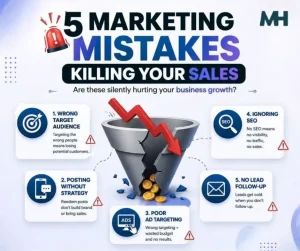
Common Marketing Strategy Mistakes
Choosing Too Many Marketing Channels
Overextending across multiple channels dilutes focus and resources.
- Mistake: Spreading efforts too thin.
- Solution: Focus on a few effective channels.
Confusing Strategy With Tactics
Many confuse high-level strategies with specific tactics, leading to unclear objectives.
- Mistake: Lack of a clear strategic vision.
- Solution: Clearly define both components.
Focusing on Likes Instead of Revenue
Measuring success solely by likes or follows does not necessarily translate to profits.
- Mistake: Emphasizing vanity metrics.
- Solution: Prioritize conversions and sales.
Copying Foreign Campaigns Without Localization
Adapting foreign strategies without cultural considerations can lead to misalignment with local audiences.
- Mistake: Failing to localize messaging.
- Solution: Tailor campaigns to local norms and preferences.
Ignoring Local SEO
Business neglect of local SEO undermines visibility in local search results.
- Mistake: Overlooking local optimizations.
- Solution: Implement local SEO practices.
Not Tracking Calls and WhatsApp Leads
Failing to track leads from direct channels leads to unmeasured performance.
- Mistake: Inconsistent lead tracking.
- Solution: Implement tracking methods for all leads.
Publishing Outdated Content
Using stale content undermines credibility and engagement.
- Mistake: Relying on old information.
- Solution: Regular updates and content audits.
Marketing Strategy Consultation in Egypt
Why Choose an Egypt-Focused Marketing Strategy?
An Egypt-focused strategy addresses local cultural nuances and preferences, enhancing connection and effectiveness with the target audience.
What Does a Marketing Consultation Include?
A marketing consultation typically encompasses an assessment of current strategies, market research, and tailored recommendations for improvement.
Book a Marketing Strategy Consultation
Ready to enhance your marketing strategy? Book a free consultation with Marketing House — an Egypt-based digital marketing agency serving businesses across Egypt, Saudi Arabia, Oman, Jordan, and Iraq since 2019. Chat with a senior strategist on WhatsApp to get started today.
Contact a Marketing Expert in Egypt
Get in touch with the Marketing House team for personalized advice and strategies that drive results in the Egyptian and GCC markets. Call +20 0111 220 6663, email info@marketinghouseeg.com, or reach out on WhatsApp. Beyond strategy, the team also handles website design and development to make sure your digital presence supports your marketing goals.
Frequently Asked Questions About Marketing Strategies
What Are the 7 Main Types of Marketing Strategies?
Grouped by channel and objective, the seven main types are Digital, Traditional, B2B, B2C, Growth, Relationship, and Creative Marketing Strategies — each suited to different business goals and audiences.
What Are the 4 Main Types of Marketing Strategies?
When grouped by the classic Ansoff Matrix growth framework, the four main types are Market Penetration, Market Development, Product Development, and Diversification Strategy — each describing a different way a business can grow.
What Are the Three Main Types of Marketing Strategies?
At the broadest level, marketing strategies are often grouped into three competitive positioning approaches: Cost Leadership, Differentiation, and Focus Strategy — a framework first defined by strategist Michael Porter.
What Are the 5 Main Marketing Strategies?
A common 5-strategy view combines Digital, Traditional, B2B, B2C, and Relationship Marketing as the core pillars most businesses build their marketing mix around.
What Are 6 Marketing Strategies?
Expanding the core list to six typically adds Growth Marketing (the Ansoff-based strategies) alongside Digital, Traditional, B2B, B2C, and Relationship Marketing.
What Are 10 Marketing Strategies?
Counting every category covered in this guide — Digital, Traditional, B2B, B2C, Growth, Relationship, Creative, Cost Leadership, Differentiation, and Focus — brings the total to 10 distinct marketing strategy types.
What Are the 12 Types of Marketing?
Beyond the 10 strategy types above, some frameworks add Local Marketing and E-commerce Marketing as standalone categories, bringing the total to 12 — the exact number always depends on how granular the classification is.
What Are Some Examples of Marketing Strategies?
Real-world examples include McDonald's "I'm Lovin' It" campaign (market penetration), Nike's expansion into streetwear (market development), Apple's annual product refreshes (product development), and Amazon launching AWS (diversification).
What Are the Types of Marketing Strategies by Kotler?
Philip Kotler's classic framework classifies businesses by their competitive market position — Market Leader, Market Challenger, Market Follower, and Market Nicher — with each position requiring a different marketing strategy to defend or grow market share.
What Is the Most Effective Marketing Strategy?
The most effective marketing strategy varies by business but often combines digital and social media components for maximum reach and engagement.
What Is the Best Marketing Strategy for Small Businesses?
Small businesses often benefit from low-budget digital strategies like social media marketing and local SEO, which enhance visibility and customer acquisition.
What Is the Best Marketing Strategy for E-commerce?
For e-commerce, strategies like SEO, retargeting ads, and influencer partnerships are effective for driving traffic and conversions.
What Is the Difference Between Strategy and Tactics?
Strategy is the overall plan to achieve goals, while tactics are the specific actions taken to implement that strategy.
What Is the Difference Between Digital and Traditional Marketing?
Digital marketing uses online channels for engagement, while traditional marketing employs offline methods like print and television.
How Much Does a Marketing Strategy Cost in Egypt?
The cost of a marketing strategy in Egypt varies based on scope but typically ranges from thousands to millions of Egyptian pounds, depending on objectives and channels.
How Long Does a Marketing Strategy Take to Work?
Results from a marketing strategy can take weeks or months to emerge, depending on the tactics employed and market conditions.
How Do I Create a Marketing Strategy?
Create a marketing strategy by defining goals, identifying target audiences, analyzing competitors, and selecting appropriate channels to engage your audience effectively.