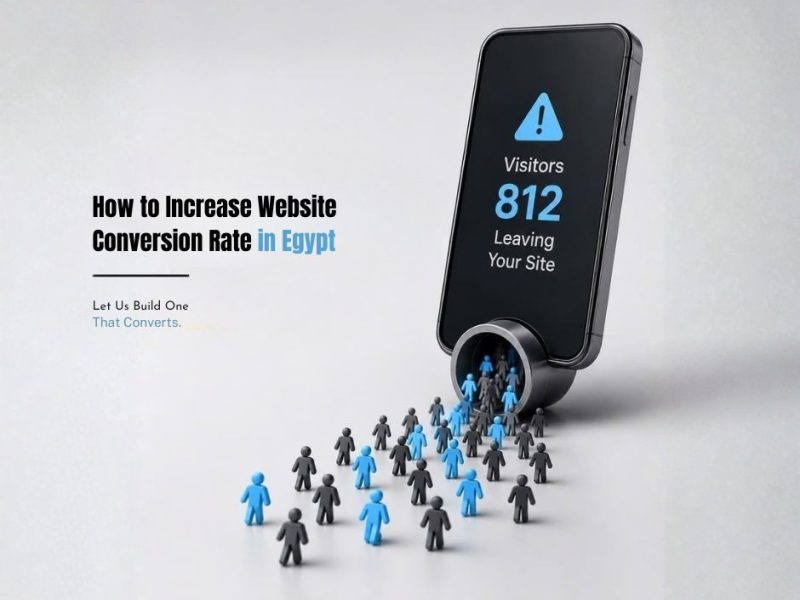
To increase the conversion rate of your website in Egypt, make pages load in under three seconds on mobile, simplify navigation, build local trust with familiar payment options such as Fawry and Paymob, and add a direct WhatsApp action. Acquiring traffic is only half the battle in digital marketing. Whether you run an e-commerce store in Cairo or B2B campaigns across the MENA region, knowing how to increase the conversion rate of website pages is one of the most effective ways to lower customer acquisition cost (CAC) and earn more from the traffic you already pay for.
At Marketing House, we combine conversion rate optimization (CRO), user experience (UX) design, and localized messaging to help brands turn passive website visitors into paying customers.
1. What Is increase conversion rate meaning?
Your website conversion rate is the percentage of visitors or sessions that complete a defined action. Depending on your business, that action could be purchasing a product, submitting a contact form, requesting a quotation, booking an appointment, or starting a WhatsApp conversation.
The basic formula is:
Conversion Rate = (Conversions ÷ Visitors) × 100
For example, if 2,000 visitors generate 40 orders during the same measurement period, the conversion rate is 2% when visitors are used as the denominator.
Be consistent with your measurement method. A conversion rate calculated from users may differ from one calculated from sessions, and a purchase conversion rate is not directly comparable with a lead-form conversion rate.
What Is a Good Website Conversion Rate?
There is no single conversion rate that is good for every website. Results vary by industry, product price, traffic source, buying intent, device, and the action being measured.
- For e-commerce, measure completed purchases and consider average order value and checkout abandonment.
- For B2B websites, track qualified inquiries, quotation requests, and the progression of leads through the sales pipeline.
- For service businesses, measure relevant actions such as consultation requests, phone calls, and WhatsApp inquiries.
Use your current performance as a baseline, segment results by traffic source and device, and compare changes over time. Industry benchmarks can provide context, but they should not replace your own data.
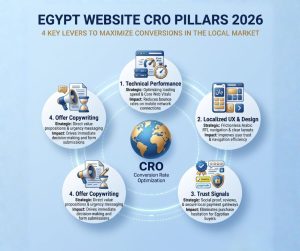
| CRO area | What to review | Business impact |
|---|---|---|
| Technical performance | Loading speed and Core Web Vitals | Helps reduce friction before visitors engage |
| User experience | Navigation, mobile layouts, and forms | Makes important actions easier to complete |
| Trust | Reviews, policies, contact details, and payment options | Addresses customer concerns |
| Messaging and offers | Headlines, benefits, pricing, and calls to action | Helps visitors understand the value of acting |
2. Find Where Your Website Is Losing Potential Customers
Before redesigning a page or changing button colors, identify where visitors encounter problems. A structured diagnostic process helps you focus on changes that may have the greatest business impact.
Step 1: Check Traffic Source and Message Match
Make sure the promise in your advertisement, search result, email, or social media post matches the page visitors reach. If an ad promotes a specific service or discount, the landing page should make that offer easy to find.
If your website also needs more relevant traffic, read our guide on how to increase unique website visitors. More traffic is useful when it reaches the right audience and supports your conversion goals.
Step 2: Review Landing Page Structure
Check whether visitors can quickly understand what you offer, who it is for, why it matters, and what to do next. Keep the primary headline, key benefits, supporting proof, and main call to action easy to find.
Step 3: Track the Conversion Funnel
Map the steps between the first visit and the final action. For an online store, that might include viewing a product, adding it to the cart, starting checkout, and completing payment. For a B2B business, it may include visiting a service page, opening a contact form, and submitting an inquiry.
Use analytics to identify where the largest drop-offs occur. Investigate possible causes before deciding what to change.
Step 4: Test Your Calls to Action
Check the placement, visibility, and wording of your main call-to-action (CTA). Make sure the button communicates a clear next step, such as “Request a Quote,” “Shop Now,” or “Contact Our Team.”
Step 5: Clarify Your Value Proposition
Explain what makes your product or service relevant to the customer. Focus on useful outcomes, service details, differentiators, and evidence that supports your claims. Avoid vague promises that could apply to any competitor.
3. Improve Website Speed and Core Web Vitals
Slow or unstable pages can interrupt the customer journey, particularly when visitors browse on mobile connections. Performance optimization should therefore be part of your conversion strategy, not just a technical maintenance task.
- Measure real performance: Test important landing pages, product pages, and checkout steps on mobile and desktop.
- Improve Core Web Vitals: Review Largest Contentful Paint (LCP), Interaction to Next Paint (INP), and Cumulative Layout Shift (CLS).
- Optimize images: Use appropriately sized images and modern formats where supported. Avoid loading unnecessarily large files.
- Reduce unnecessary scripts: Review third-party widgets, tracking scripts, and plugins that may affect page performance.
- Check server performance: Investigate slow server responses and performance problems during traffic spikes.
Set performance priorities based on measured issues rather than assuming that every page needs the same technical fixes.
Need help improving your website’s technical foundation? Explore our web development services to learn more about building and improving business websites.
4. Improve UX and Mobile Usability for Egyptian Audiences
Your website should make the next step clear regardless of the visitor’s device, language, or familiarity with your business. For audiences in Egypt, test both Arabic and English experiences when your website serves bilingual customers.
Design Arabic Pages for Right-to-Left Reading
Arabic pages should use a consistent right-to-left layout. Review text alignment, navigation, form fields, icons, and mixed Arabic-English content to make sure the layout feels natural and remains easy to use.
Make Mobile Navigation Simple
- Keep the main menu understandable and avoid unnecessary navigation levels.
- Make important actions easy to reach on smaller screens.
- Use readable text sizes and sufficient spacing between interactive elements.
- Make phone numbers, forms, and WhatsApp links easy to use on mobile.
- For e-commerce, keep search, product filters, pricing, and delivery information accessible.
Ask for Only the Information You Need
Long forms can create unnecessary friction. Start by requesting the information required for the next step, such as a name, contact method, and service of interest. Ask for additional details later when they are genuinely necessary.
For more practical guidance, read our article on landing page UX best practices, including message consistency, mobile usability, forms, and calls to action.
5. Build Trust Before Asking Visitors to Convert
Visitors may hesitate when they cannot verify who operates a website, what happens after they submit a form, or whether a purchase is secure. Trust signals should answer real questions instead of simply decorating the page.
- Show authentic reviews: Use genuine customer feedback and obtain permission where needed.
- Present clear business information: Make contact details, service descriptions, and relevant company information easy to find.
- Explain policies: For e-commerce, make applicable delivery, return, refund, and warranty terms clear before checkout.
- Display payment options accurately: If relevant, explain supported methods such as Fawry, Paymob, cards, Vodafone Cash, or cash on delivery. Only list methods your business actually supports.
- Use evidence responsibly: Publish genuine case studies, client feedback, certifications, and performance figures only when they can be verified.
- Set clear expectations: Explain what happens after someone requests a quotation, submits a form, or contacts your team.
Trust is especially important when a visitor is making a high-value purchase or choosing a long-term business service. Specific, verifiable information is more useful than unsupported claims about being the best in the market.
6. Improve Copywriting, Offers, and Calls to Action
Effective conversion copy answers the questions visitors are likely to have and makes the next step feel straightforward. It should explain value clearly without relying on exaggerated promises or artificial urgency.
Lead With the Customer Benefit
Write headlines that explain the service or product and the problem it helps solve. Support the headline with a concise explanation of what is included, who the offer is for, and what makes it relevant.
Create Dedicated Landing Pages
When a campaign targets a specific audience or offer, send visitors to a relevant landing page rather than making them search for the information on a general homepage. The page should maintain a clear connection between the campaign message and the proposed action.
Use Clear Calls to Action
Replace vague labels such as “Submit” with wording that explains the action, when appropriate. Examples include:
- Request a Quote
- Speak With Our Team
- View Available Products
- Book an Appointment
- Contact Us on WhatsApp
Choose the CTA that matches the visitor’s intent. Do not promise a free consultation, discount, or specific result unless the offer is confirmed and available.
7. Use A/B Testing and Personalization Carefully
Once you have identified a potential problem, test changes in a structured way. A/B testing compares two versions of a page or element to determine whether one performs better for the chosen objective.
- Test one meaningful change: Compare a headline, CTA, form structure, or page layout while keeping other factors as consistent as possible.
- Define the primary metric: Choose the conversion event that reflects the goal, such as completed purchases or qualified form submissions.
- Allow enough data to accumulate: Avoid drawing conclusions from a small number of conversions or a short-lived traffic fluctuation.
- Segment results: Where the data supports it, compare performance by device, channel, landing page, or audience.
- Use personalization responsibly: Adapt content to a visitor’s genuine needs or context without creating confusing or misleading experiences.
Heatmaps and session recordings can help reveal where users click, scroll, or encounter friction. Use them alongside analytics and respect applicable privacy requirements. Behavioral observations can suggest a hypothesis, but controlled measurement helps evaluate whether a change improves results.
8. Track Conversions and Measure Business Results
Conversion optimization depends on reliable measurement. If important actions are not tracked correctly, it becomes difficult to identify which pages and campaigns contribute to business outcomes.
Set Up Meaningful Conversion Events
Use Google Analytics 4 (GA4) and Google Tag Manager where appropriate to measure key actions. Depending on your website, these may include completed purchases, successful form submissions, calls, and WhatsApp clicks.
Remember that a click on a WhatsApp link is not necessarily a qualified lead or a completed sale. If possible, connect website tracking with your lead management or sales process to understand what happens after the initial interaction.
Monitor the Right KPIs
| Metric | What it tells you |
|---|---|
| Conversion rate | The share of measured visitors or sessions completing the chosen action |
| Cost per lead (CPL) | The acquisition cost per lead, based on your defined cost and lead model |
| Average order value (AOV) | The average revenue per order |
| Checkout abandonment | The share of checkout starters who do not complete a purchase, based on your defined funnel |
| Lead-to-customer rate | The share of leads that eventually become customers |
Interpret these metrics together. A higher conversion rate is not automatically better if lead quality declines, order value falls, or customer acquisition costs rise. The aim is to improve commercially meaningful outcomes, not just clicks.
To understand how search visibility can support lead generation, explore our guide to B2B SEO strategy and qualified leads.
9. Common Website Conversion Mistakes to Avoid
- Designing for desktop alone: Check the full journey on mobile, from the first landing page to the final action.
- Sending every visitor to the homepage: Use relevant pages that match the visitor’s search, advertisement, or campaign.
- Making unsupported claims: Use specific and verifiable statements instead of exaggerated promises.
- Ignoring customer questions: Explain pricing, product details, delivery, service scope, or the next step where visitors need that information.
- Adding too many form fields: Remove fields that are not necessary at the current stage of the customer journey.
- Forcing account creation too early: Where feasible, simplify checkout and offer a guest checkout option.
- Changing pages without measurement: Record a baseline and assess the effect of meaningful changes.
- Counting every interaction as a sale: Separate clicks and initial inquiries from qualified leads, completed purchases, and revenue.
10. Tools for Conversion Rate Optimization
The right tools depend on your website, budget, and measurement needs. Start with the basics before adding more software to your stack.
- Google Analytics 4: Measure traffic, engagement, and configured conversion events.
- Google Tag Manager: Manage supported tracking tags and measurement configurations.
- PageSpeed Insights: Review page performance and Core Web Vitals information.
- Microsoft Clarity or Hotjar: Where suitable, use heatmaps and session recordings to investigate usability issues.
- A/B testing platforms: Consider a testing solution when you have a clear hypothesis, sufficient traffic, and a measurement plan.
- CRM or lead management software: Track lead quality and progression from inquiry to customer.
Tools do not replace a clear strategy. Choose solutions that answer specific questions, are configured correctly, and provide information you can act on.
11. how to increase the conversion rate of website with marketing house and Examples From Projects
Relevant project examples can help readers understand how website design, user experience, and digital marketing work together. The following pages describe projects from the Marketing House portfolio; consult the case studies for the available project details.
El-Khalifa Group
Explore the El-Khalifa Group website project for an example of website development and user experience work in the real estate sector.
Use the case study for project-specific details. Do not attribute a conversion increase or lead-growth percentage unless the result has been measured and approved for publication.
FMP E-commerce Project
Review the FMP e-commerce project for an example related to online retail and product-page optimization.
Refer to the published project details for the scope of work. Add sales or conversion figures only when verified data and the measurement period are available.
12. A Practical 30-Day Website Optimization Plan
You do not need to change every page at once. A focused plan can help you identify the biggest issues, implement improvements, and learn from the results.
| Period | Priority | Tasks |
|---|---|---|
| Week 1 | Audit and baseline | Review analytics, speed, mobile usability, key landing pages, and conversion tracking. |
| Week 2 | Fix major friction | Address broken journeys, confusing messaging, slow assets, and unnecessary form fields. |
| Week 3 | Improve clarity and trust | Refine CTAs, clarify offers, improve contact options, and display relevant proof. |
| Week 4 | Measure and prioritize | Review available data, run appropriate tests, and document the next set of improvements. |
This is a planning framework, not a guarantee that results will appear within 30 days. Testing time depends on traffic volume, conversion frequency, technical complexity, and the changes being evaluated.
Frequently Asked Questions
How can I increase my website conversion rate?
Start by identifying where visitors drop out of the customer journey. Improve page speed, mobile usability, message clarity, trust signals, forms, and calls to action. Track the results using a consistent conversion definition and test meaningful changes where possible.
Is a 12% website conversion rate good?
It depends on the conversion event, industry, traffic source, and how the rate is calculated. A 12% conversion rate for a narrowly targeted lead form is not directly comparable with a 12% purchase rate for an e-commerce store. Compare similar audiences and conversion types, and evaluate lead quality or revenue alongside the rate.
How can I increase my e-commerce conversion rate?
Improve product-page speed, use clear product images and descriptions, display accurate pricing and delivery information, simplify checkout, explain return policies, and offer payment methods your business supports. Track each stage of the purchase funnel to identify where customers encounter friction.
Does website speed affect conversion rate?
Slow pages can make it harder for visitors to engage with your offer or complete an action. Measure performance on important pages, review Core Web Vitals, and prioritize fixes based on real technical issues and user behavior.
Does SEO help improve website conversions?
SEO can bring relevant visitors to pages that match their search intent. Conversion optimization helps those visitors understand the offer and take the next step. Combining both approaches can support better business outcomes, but results depend on traffic quality, page relevance, and the strength of the offer.
How long does conversion rate optimization take?
The timeline depends on the size of the problem, the complexity of the changes, the volume of relevant traffic, and how frequently conversions occur. Some usability issues can be corrected quickly, while reliable A/B testing may require more time and data.
Ready to Improve Your Website Performance?
Improving conversion rate starts with understanding your visitors, removing unnecessary friction, and measuring the actions that matter to your business. A structured approach helps you prioritize changes based on evidence instead of guesswork.
Marketing House works across digital marketing and website-related services. If you want to discuss your website goals, contact the team to explore the next steps for your business.
Let’s Discuss Your Website Goals
Tell us about your website, target audience, and the conversion challenges you want to solve.