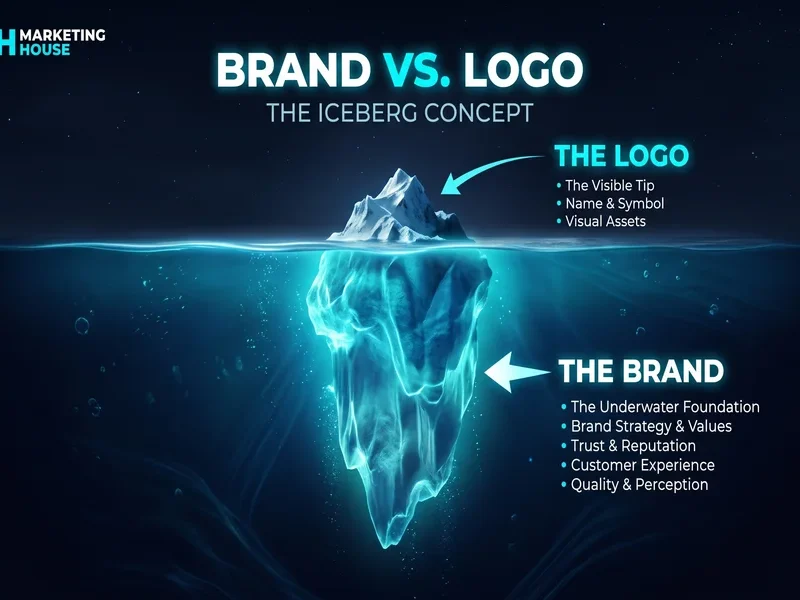
The difference between brand and logo, with an example, comes down to scope: a logo is the visual symbol that helps people recognize a business, while a brand is the overall identity, experience, and perception attached to it. Nike’s Swoosh is a logo; Nike’s brand is everything people expect when they see it. In this guide, you’ll see the key differences, practical examples, common mistakes, and how to build a brand that goes beyond visual design.
The two terms are often used interchangeably, but they serve different purposes. A common analogy: the logo is a company’s face, and the brand is its personality, values, and behavior. A face helps people recognize you; it is your actions that decide whether they trust you.
What Is a Logo?
A logo is a visual identifier used to represent a business, organization, product, or service. It can consist of a business name, initials, a graphic symbol, or a combination of text and imagery.
The primary purpose of a logo is recognition. It helps people identify a business across its website, social media profiles, packaging, advertisements, and other marketing materials.
What Makes a Good Logo?
- Recognizable: it helps people distinguish the business from others.
- Appropriate: its style suits the audience and the business’s positioning.
- Legible: any text stays readable at relevant sizes.
- Versatile: it works across suitable digital and printed applications.
- Consistent: it follows clear rules for use across marketing materials.
A logo does not need to be complicated to be effective. A simple, distinctive design works well when it fits the business and is used consistently. Still, a logo supports recognition; it cannot guarantee customer trust or loyalty on its own.
What Is the Difference Between an Emblem and a Logo?
An emblem is one type of logo, not a separate concept. It places the name and the imagery inside a badge, seal, or crest, so the text and symbol cannot be separated. Other logo types, such as wordmarks or standalone symbols, can use text or imagery independently.
What Is a Brand?
A brand is the overall identity, meaning, and perception associated with a business, product, or service. It is shaped by the identity a company creates and by the impressions people form through communication, reputation, and real experiences. The picture customers hold of a business in their minds is often called its brand image.
A brand extends beyond visual design. Product quality, customer service, messaging, pricing, reliability, and the way a company treats its customers all influence how people perceive it.
What Are the Main Elements of a Brand?
- Brand strategy: target audience, positioning, differentiation, and business direction.
- Brand identity: the visual and verbal elements used to express the brand.
- Brand messaging: the language, tone, and key messages used with customers.
- Brand promise: the experience or value customers are encouraged to expect.
- Customer experience: the interactions customers have throughout their journey.
- Brand reputation: the opinions and expectations people form through information and experience.
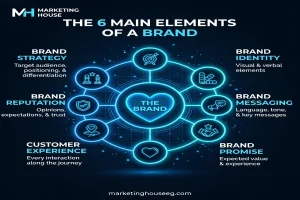
These elements work together. An attractive identity may capture attention, but the wider experience decides whether customers believe the brand’s message.
What Is a Brand Promise?
A brand promise is the expectation a business communicates about the value or experience customers should receive. For example, a company might focus on dependable delivery, carefully selected materials, straightforward service, or personalized support.
A brand promise is more than a slogan. It becomes meaningful only when the business consistently delivers what it communicates, so the promise should be realistic.
Brand and Logo Difference: Key Differences Explained
The main difference between a brand and a logo is their scope. A logo is a specific visual asset, while a brand includes the wider identity and associations that distinguish a business.
| Comparison | Logo | Brand |
|---|---|---|
| Definition | A visual identifier representing a business or offering. | The overall identity, meaning, and perception associated with a business. |
| Primary purpose | To help people recognize the business. | To communicate value and shape customer expectations. |
| Tangibility | A tangible design asset you can see and file. | Largely intangible: it lives in people’s perception. |
| What it includes | Text, symbols, graphic forms, or a combination. | Strategy, identity, messaging, customer experience, and reputation. |
| Control | Fully controlled by the business and its designers. | Shaped by the business, but ultimately formed by customers’ experiences. |
| How it evolves | Can stay stable or be updated when needs change. | Positioning can evolve, while perceptions develop through experience. |
| Typical timeline | Design may take days or weeks, depending on scope. | Strategy and identity may take weeks or months; reputation develops over time. |
In short, a logo is one component of the brand. A business needs both a recognizable visual identity and a consistent experience that supports what it wants customers to believe.
Brand and Logo Examples From Real Companies
Real-world examples show how a logo works within a broader brand.
1. Nike: A Logo Within a Larger Brand
Nike is widely associated with its Swoosh symbol, which acts as a recognizable visual identifier. The wider Nike brand includes its products, advertising, “Just Do It” messaging, athlete partnerships, and retail experiences. The Swoosh helps people identify Nike; the brand shapes what that identification means to them.
2. Apple: A Simple Logo, a Much Larger Brand
The Apple logo is a minimal apple silhouette with a bite taken out. The brand is what people expect behind it: design quality, product ecosystem, packaging, in-store support, and premium positioning. If the symbol changed tomorrow, the expectations built through products and service would still define the brand.
3. McDonald’s: Recognition Built on Consistency
The golden arches are recognized almost anywhere. Yet the recognition comes from the consistent experience customers associate with them, such as speed, familiarity, and a similar menu across locations, not from the shape alone.
4. La Cresta: Logo and Visual Brand Identity
A branding board shows how a logo works alongside other visual elements. The La Cresta example below presents one as a visual reference for a broader identity.
A visual identity may include logo variations, colors, typography, imagery, and graphic elements. Together they help a business keep a consistent appearance. However, a branding board shows only the visual side: strategy, messaging, customer experience, and reputation also shape perception.
Explore our branding agency in Egypt to see how we develop consistent brand identities.
Brand Identity vs. Logo vs. Brand Mark
These terms are related, but they describe different parts of a business’s presentation.
What Is Brand Identity?
Brand identity is the collection of visual and verbal elements a business uses to express itself: the logo, color palette, typography, imagery, tone of voice, and brand guidelines. It helps the business communicate consistently across its website, social media, packaging, and advertising. Read more in our guide to corporate identity and brand storytelling.
What Is a Brand Mark?
A brand mark is a graphic symbol that represents a brand, often used without the brand name beside it. Terminology varies among designers, and a brand mark can form part of a larger logo system.
| Term | Meaning | Example |
|---|---|---|
| Brand | The overall identity, meaning, and perception associated with a business. | The complete experience and associations people connect with a company. |
| Brand identity | The visual and verbal elements used to express the brand. | Colors, typography, imagery, messaging, and logo applications. |
| Logo | A visual identifier for a business or offering. | A wordmark or a combination of name and symbol. |
| Brand mark | A graphic symbol representing a brand, often used independently of its name. | A standalone symbol within a logo system. |
Can a Brand Exist Without a Logo?
Yes. A business can develop a brand before it has a finalized logo. People may recognize it through its name, products, service, communication, reputation, or customer experience.
A logo still makes the business easier to identify and helps maintain a consistent visual presence as it grows. That is why logo design should follow a clear understanding of the business and its audience rather than replace brand strategy.
Is Your Problem the Brand or the Logo?
Many small businesses redesign the logo when the real issue sits elsewhere. Use this quick check to find where to start.
| What you notice | Likely area | Where to start |
|---|---|---|
| People forget your name or confuse you with competitors | Logo and visual identity | Review distinctiveness and consistency of the logo and colors |
| Your logo looks poor when small, in one color, or on social media | Logo | Create versatile logo variations and usage rules |
| Customers don’t understand what makes you different | Brand positioning | Clarify audience, positioning, and key messages |
| Your promises and real service don’t match | Brand experience | Align operations and communication with your brand promise |
| Every channel looks and sounds different | Brand identity | Build guidelines for visuals and tone of voice |
This is a practical guide, not a rule: most businesses need to work on more than one row. If you’re unsure, our team can review your current branding and recommend priorities. Talk to our branding team.
Logo and Brand Design for Egypt and Saudi Arabia
For businesses serving Egyptian and Saudi audiences, the brand and logo question has a bilingual dimension. Many companies need an identity that works in both Arabic and Latin scripts.
- Script pairing: check that the Arabic and English versions of the name feel like one identity, not two separate logos.
- Layout direction: Arabic reads right to left, so horizontal logo versions may need different arrangements.
- Legibility: test small sizes on mobile screens, signage, and packaging in both scripts.
- Cultural fit: colors, symbols, and tone should suit each market’s audience, so research before you finalize them.
Why Does the Difference Between a Brand and a Logo Matter?
1. It Helps You Build a Clear Strategy
Before designing a logo, understand your audience, positioning, values, and competitive differences. These decisions give direction to your visual identity and messaging.
2. It Creates Consistent Communication
A clear brand identity helps a business present itself consistently across its website, social media, advertising, packaging, and customer communications. For more ideas, read our guide on how to build your brand on social media.
3. It Aligns Expectations With the Customer Experience
Brand messaging creates expectations, but the actual product and service experience decides whether customers believe them. A nice logo cannot repair a weak reputation, so make realistic promises and deliver on them.
4. It Supports Recognition Over Time
A logo is one part of recognition. Consistent messaging, distinctive products, reliable service, and positive experiences strengthen the associations people develop with a business.
5. It Guides Better Design Decisions
When brand strategy is clear, designers have a stronger basis for choosing colors, typography, and imagery, so design supports your positioning rather than personal taste or short-term trends.
6. It Helps You Protect What You Own
Business names and logos can often be registered as trademarks, but rules differ by country. Confirm the process with a qualified intellectual property professional in the markets where you operate.
How to Build a Brand, Not Just a Logo
Building a brand involves more than creating an attractive symbol. These steps give your business a stronger foundation.
Step 1: Define Your Target Audience
Identify the people you want to reach. Consider their needs, preferences, challenges, buying motivations, and how they compare alternatives.
Step 2: Establish Your Brand Positioning
Define what your business offers, whom it serves, and how it differs from other options. Positioning should matter to your audience and reflect what you can genuinely deliver.
Step 3: Clarify Your Brand Promise and Messaging
Decide what customers should expect from you. Develop key messages that communicate your value clearly in language that suits your audience.
Step 4: Develop Your Visual Identity
Create a visual identity that expresses your strategy: logo, colors, typography, imagery, graphic elements, and guidelines for using them consistently.
Step 5: Apply Your Identity Consistently
Use your identity and messaging across your website, social media, marketing materials, packaging, and other touchpoints.
Step 6: Deliver on Your Brand Promise
Make sure the customer experience supports the expectations you communicate. Product quality, service, delivery, and follow-up all influence brand perception.
Step 7: Review and Improve Over Time
Pay attention to customer feedback and business changes. Your brand can evolve, but changes to the visual identity should be considered within your overall strategy. For a deeper framework, read our guide to the 7 stages of the branding process.
Common Mistakes When Building a Brand and a Logo
- Starting with the logo: designing visuals before defining audience and positioning.
- Inconsistent touchpoints: using different colors, tone, or logo versions across channels.
- Treating branding as a one-time project: a brand needs review as the business grows.
- Copying competitors: generic, “me-too” identities make a business harder to remember.
- Confusing brand identity with the brand: identity is how you express the brand, not the brand itself.
How to Measure Brand Impact vs. Logo Impact
A logo is easier to evaluate than a brand, but both can be tracked. These indicators are commonly used, and the right mix depends on your business:
- Logo: recognition tests, consistency audits across channels, and readability at different sizes.
- Brand: direct searches for your business name, customer feedback and reviews, repeat purchases, and how customers describe you in their own words.
Conclusion: A Logo Is Part of Your Brand, Not the Whole Brand
The brand and logo difference comes down to scope: a logo is a visual identifier, while a brand represents the wider identity, meaning, expectations, and perceptions associated with a business.
A logo helps people recognize your business, but strategy, messaging, products, customer experience, and reputation shape the wider brand. Start by defining what your business stands for and whom it serves, then create a visual identity that communicates those decisions clearly.
Ready to Build a Stronger Brand?
Marketing House can help you develop a consistent brand identity, including brand and logo design, that reflects your business and communicates your value to the right audience.