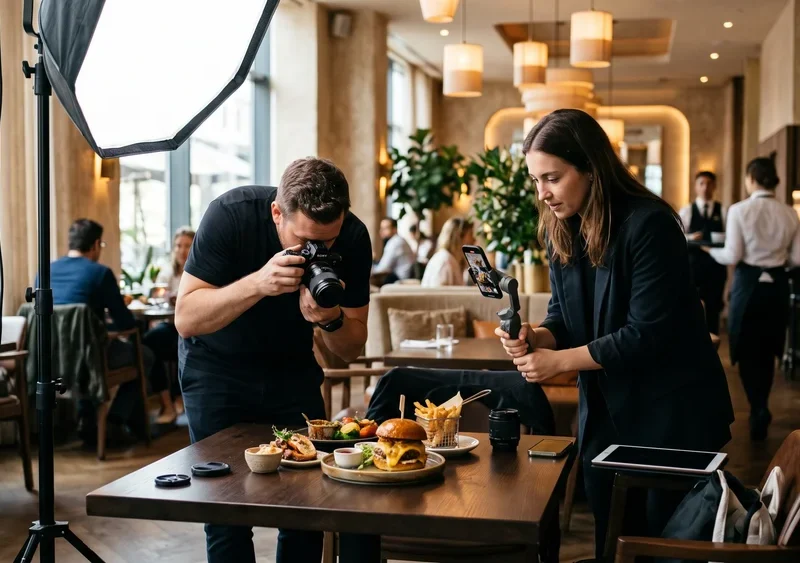
A social media marketing agency restaurants can trust should do more than post food photos. In practice, it plans and produces food content, publishes it on the right platforms, runs paid ads, answers guests, and reports the calls, bookings, and orders that follow. Good work ties every post and every ad to a goal, such as filling tables on quiet weekdays, launching a new dish, or increasing delivery orders. That is also what separates the best restaurant social media campaigns from a feed that only looks good.
This guide explains how that work is planned, what affects cost, how to compare agencies, and how to measure results, with examples from our restaurant projects in Egypt. Marketing House combines social media Agency and paid ads with brand identity, 3D interior and booth design, and food photography, so the menu, storefront, and feed look like one brand. Pricing depends on scope, so a free consultation is the fastest way to get an accurate figure.
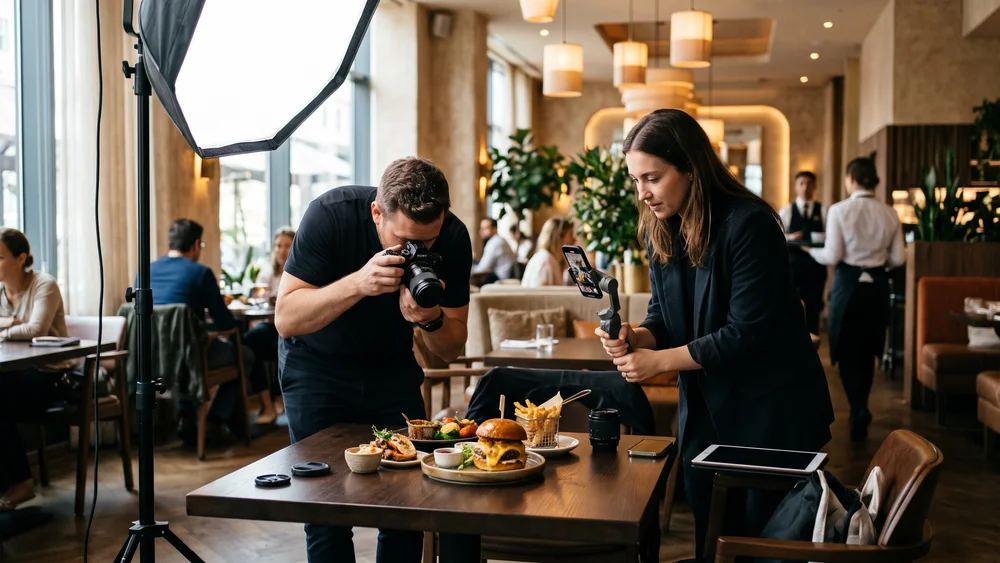
What a restaurant social media agency does each week
Restaurant social media runs on a steady weekly rhythm rather than occasional bursts. Social media management for restaurants covers the tasks below, and each one has a clear owner:

| Task | What it involves | Who usually owns it |
|---|---|---|
| Content planning | Choosing dishes, offers, and events to feature | Agency with restaurant input |
| Production | Shooting, editing, and writing captions | Agency or photographer |
| Publishing | Scheduling posts, Stories, and short videos | Agency |
| Community replies | Answering comments and direct messages | Agency or restaurant, agreed in advance |
| Paid campaigns | Launching, adjusting, and pausing ads | Agency |
| Reporting | Reviewing actions that came from social | Agency with restaurant sales data |
The last row matters most. If the agency reports only on followers and likes, it cannot tell you whether social is working. Ask which actions it will track, and who supplies the sales or reservation data.
Many restaurants also add food creators and guest content to the weekly mix. Choose local creators whose audience lives near your branches, brief each one on a specific dish or offer, and give each a tracked link or code so you can see which partnership brought guests in. Reshare guest photos only with permission.
Set the goal before choosing platforms
Platforms are a tool, not a strategy. A social media strategy for restaurants starts with one specific goal, then chooses the content and channels that serve it. Among restaurant marketing strategies, social media works best when it supports one clear goal at a time.
The goal changes the style of the content. Fast food social media marketing leans on speed and volume: limited-time bundles, quick replies, and ordering links. A fine-dining room leans on atmosphere, chef stories, and reservations. Food and beverage social media marketing for cafés, bakeries, and cloud kitchens follows the same goal-first logic, with different weights.
| Goal | Typical content | Metrics to track |
|---|---|---|
| Fill tables on weekday afternoons | Lunch offers, short venue clips, location posts | Reservations, direction requests, calls |
| Launch a new dish | Process videos, close-up photos, tasting reactions | Orders or sales of that item, messages about it |
| Grow delivery orders | Menu photos, bundle offers, ordering links | Orders from tracked links, app orders by source |
| Announce a new branch | Interior photos, 3D renders, opening events | Calls, direction requests, check-ins where available |
| Build brand recognition | Brand story, chef or team content, signature dishes | Profile visits, saves, shares, repeat engagement |
Rule of thumb: choose one primary goal per quarter. Restaurants that try to optimize for everything at once usually end up with content that does none of it well.
What affects the cost of restaurant social media
We do not publish a fixed price because the scope differs for each restaurant. The factors that change a quote are:
- Number of platforms and branches
- Monthly content volume, and whether video is included
- Whether a food photo session is needed, and how many dishes it covers
- Whether paid advertising is managed as part of the plan
- Whether branding, menu design, or 3D space design must be finished first
- How often the team must reply to comments and messages
Agencies usually price in one of three ways. A monthly plan covers ongoing work. A project fee covers a defined task such as a launch or a photo session. An hourly rate covers time spent on requests that are hard to define in advance. Each suits different needs, so ask which one applies to you and why.
Because every restaurant needs a different mix of services, a single monthly figure rarely tells you much. A price only means something next to a list of deliverables, so we do not quote numbers in advance. You can contact us for free to ask any question or request a written quote that matches your restaurant's scope.
Common entry points for a restaurant are a single food photo session, a monthly content plan, or a content plan with managed paid ads. Starting with one of these and expanding later is usually safer than buying a large package before the tracking is in place. The next part shows how to read a quote line by line.
How to read a quote
A useful quote lists each deliverable: how many posts per month, how many videos, how many photos from a session, which platforms, who approves content, and what reporting is included. It also states what is excluded, such as ad spend, printing, or travel to the restaurant. If a quote says only “social media management” with no line items, ask for the breakdown before comparing it with others.
Red flags to watch for
- A promise of guaranteed followers, guaranteed bookings, or a fixed number of new customers
- No written scope or no list of deliverables
- No examples of restaurant work, only generic portfolio pieces
- Requests for your social media passwords without a clear, documented access process
- Pricing that depends on buying followers or engagement
How to compare restaurant social media agencies
Compare agencies on the same scope. Ask each one the same questions and look for specific answers, not general reassurance.
- Which restaurant brands have you worked with in Egypt or Saudi Arabia, and what did you do for each?
- Who creates the content, and who approves it before it goes live?
- Is food photography done in-house or by a partner? Who owns the files afterward?
- How many posts, Stories, and videos are included each month?
- Which metrics do you report, how often, and what data do you need from us?
- How do you handle comments and direct messages, and what response time do you agree to?
- Can you share references from past restaurant clients?
- What is included in the quote, and what would cost extra?
A strong answer names specific work, describes a process, and asks you for information. A weak answer gives vague claims and avoids the question about data.
Platforms and formats that suit restaurants
Each platform serves a different job. Use them together, but choose the formats each one handles best.
- Instagram suits polished food photos, carousels showing a dish from several angles, and Reels for short process or atmosphere clips. Stories work well for daily specials, polls about menu items, and quick updates.
- Facebook suits event announcements, local audiences, and sharing menus or opening hours. Its groups and local pages still reach nearby customers, especially for older audiences.
- TikTok suits short videos of preparation, plating, and staff personality. Content works best when it feels native to the platform rather than a re-cut of a polished ad. In our experience, campaigns on TikTok usually work better when they repeat one simple idea, such as a weekly dish reveal, instead of posting random one-off clips.
- Google Business Profile supports local search. Keep your photos, opening hours, menu link, and category current, and respond to reviews. Profile details matter for guests who search “near me” before they choose a restaurant.
Start with one or two platforms, then expand once the content is consistent and the tracking is working.
An illustrative weekly content plan
The table below shows how a restaurant might structure a week. It is an example of the structure, not a client result or a fixed recommendation.
| Day | Format | Content | Purpose |
|---|---|---|---|
| Monday | Carousel | Signature dish, four angles | Brand recognition |
| Tuesday | Stories | Today's special, poll on a menu item | Weekday traffic |
| Wednesday | Reel | Kitchen process, 20-second clip | Reach new viewers |
| Thursday | Photo | Team member or chef introduction | Trust and personality |
| Friday | Stories and ad | Weekend offer with a booking link | Reservations |
| Saturday | Stories | Guest moments (with permission) | Community |
| Sunday | Post | Weekly recap, opening hours, location | Local search |
Adjust the mix to match your goal. A restaurant chasing delivery orders needs more menu and ordering content; a restaurant opening a branch needs more interior and event content.
Restaurant social media marketing ideas that fit this plan include a weekly dish reveal, a chef or kitchen series, a limited-time bundle with a booking or ordering link, a guest photo day with permission, and a countdown before a new branch opens. The best restaurant social media campaigns pick one of these ideas, repeat it for several weeks, and track the same action each time. To build the calendar behind it, see our guide to a social media content plan, and for a step-by-step walkthrough, read how to run a successful social media campaign.
What makes a food photo session work
A food photo session is a production with a plan, not a quick shoot. Before the session, prepare the following:

- A menu list with the dishes to feature, ranked by importance
- A shot list that covers hero shots (the dish on its own), detail shots (texture, sauce, melt), process shots (cooking or assembly), environment shots (the table, the space), and people (staff preparing food, with permission)
- Brand assets: logo files, colors, fonts, and the packaging or serving pieces the restaurant wants to show
- A usage plan: where each image will appear, such as the menu, delivery apps, social posts, and ads
Our Cheezophrenia project followed this structure: the session covered signature dishes including cheesy burgers, crispy chicken sandwiches, pasta pans, and hotdogs, and every image was edited for multiple uses before the social media work started. If you need the shoot and the clips from one team, see our food photography and video production service.
Why branding and 3D design belong in the same plan
Social media works best when the feed matches the restaurant. A food post that looks different from the storefront or the menu makes guests less certain about what they will find. Branding fixes that by defining the logo, colors, typography, and visual rules before content is produced.

3D design adds a second layer. It lets a restaurant see its interior, booth, or event space before building it, and those renders can become content later. For La Cresta, we created 3D concepts for interiors and outdoor booths in daylight and at night, and the team could see how the brand would look in a real space.
For Brilliant Group, which is building several restaurant concepts, we developed a brand identity with logo and guidelines, plus 3D visualizations and interior renderings, so each new concept can share a visual system. Our Branding Agency in Egypt service covers that process in more detail.
Asset checklist before a campaign starts
- Logo files in high resolution
- Brand color codes and fonts
- Any existing brand guidelines
- The menu or packaging you want to feature
Missing assets delay production more often than any other factor.
Paid advertising for restaurants: how a campaign is structured
Social media advertising for restaurants works best when it is built in stages, each with a clear goal and measure.
| Stage | What to do | What to measure |
|---|---|---|
| Objective | Pick one: awareness, traffic, messages, or leads | The objective's main action |
| Audience | Set a radius around the restaurant, plus age and interest filters | Reach and cost per result |
| Creative | Prepare two or three versions with different images or offers | Which version gets the most actions |
| Offer | Give guests a reason to act now, such as a limited-time bundle | Redemptions or bookings |
| Budget | Start small, test, then scale what works | Cost per action over the test period |
| Review | Compare results against the goal every week | Decide what to pause, keep, or expand |
Change one variable at a time. If you change the image, the audience, and the offer together, you cannot tell which one made the difference. Keep a simple log of each test: what changed, when, and what happened.
Marketing House also offers paid advertising and PPC management for restaurants that want one team to run these stages.
How to measure restaurant social media results
Marketing a restaurant with social media only pays off when you can see which posts and ads brought guests in. Measure actions that bring guests in, not only likes and reach. Set up tracking before the first campaign launches:

- Tracked links for online ordering and reservation pages, so each platform's orders are counted separately
- A tracked phone number or WhatsApp link for each campaign, so calls and messages can be attributed
- A simple question at the point of booking or at the table: “How did you hear about us?”
- Platform insights for reach, saves, and profile visits, which show whether content is being noticed
- A monthly review sheet with one row per campaign and columns for the goal, the actions, the cost, and the decision made
Review the sheet every month and compare it with the goal you set at the start. A month with high reach and few actions suggests the offer or call to action needs work, not necessarily the content.
Reviews, replies, and local trust
Reviews influence where guests choose to eat, and they also appear in local search results. Reply to reviews quickly and courteously, whether they are positive or negative. Thank guests for specific details, and for complaints, acknowledge the problem, apologize where appropriate, and move the conversation offline if the details are private.
Never post fake reviews or offer incentives that break a platform's rules. Ask guests for reviews in a way that follows each platform's policies, and keep your business information accurate across Google, Facebook, and your website.
Common mistakes and how to avoid them
- Posting only menu photos. Guests want to see people, process, and place as well as food. Mix formats.
- Inconsistent visuals. Use the brand assets consistently across the menu, storefront, and feed.
- Ignoring comments and messages. Unanswered questions about hours or reservations cost bookings. Agree on who replies and how quickly before launch.
- Running ads without tracking. If you cannot tell which campaign produced a call, you cannot decide where to spend.
- Judging results after one week. Most campaigns need time to collect enough actions to compare. Agree on the review period in advance.
- Buying followers. It inflates a number that does not bring guests in, and it weakens the account's real engagement.
Our restaurant projects in more detail
Cheezophrenia
The work combined food photography with social media. The session focused on signature items, and the edited images then supported content creation, platform management, and promotional ads. The photos were used for menus and promotions as well as social posts.
Read the case studyLa Cresta
The project covered brand identity (logo, typography, visual guidelines, and a brand board), 3D design for interiors and outdoor booths, and a social media plan with cultural storytelling and targeted advertising, supported by a food photo session.
Read the case studyBrilliant Group
Brilliant Group is building several restaurant concepts under one umbrella. The work covered brand strategy and identity with full guidelines, plus 3D visualizations and interior renderings that helped the team plan layouts and atmosphere before opening.
Read the case studyEvery restaurant has a different starting point, so we agree on what success looks like with you during the consultation, before any work begins.
What our clients say
“a brand identity, a unique 3D design, and menu”The CEO of the group behind La Cresta and Brilliant Group, describing the work we did for his restaurants
References from restaurant clients are available on request during your consultation.
How a typical engagement starts
- ConsultationWe discuss your restaurant, your goal, your platforms, and your budget.
- Brief and asset reviewWe check your brand assets, menu, and existing accounts.
- PlanWe propose a scope, content mix, and reporting structure in writing.
- ApprovalYou approve the plan, the content calendar, and the tracking setup.
- LaunchContent and any campaigns go live according to the agreed schedule.
- Monthly reviewWe compare results against the goal and agree on the next month's changes.
The exact steps depend on your scope, and we confirm them with you during the consultation.
Where we work
Our office is in 6th of October City, Giza. We serve clients in Egypt and Saudi Arabia. The three case studies above are all Egyptian restaurants, so tell us about your Saudi branches and we will explain how the work would be set up for that market. In our experience, the platform mix often differs there, with Snapchat and X sitting beside Instagram and TikTok, and our guide to the latest social media trends in Saudi Arabia covers the shifts to plan around.
How long until a restaurant sees results?
Results depend on your starting point, how consistently you post, and the budget behind any paid campaigns. In the first month, the focus is usually on setting up tracking, producing consistent content, and collecting enough data to judge. We do not promise a fixed timeline. Agree on the metrics that matter before the work starts, so progress is measured against your goals.
Frequently asked questions
How much does a social media marketing agency cost for restaurants?
It depends on scope: platforms, branches, content volume, video, photography, paid advertising, and whether branding is needed. Because these differ for every restaurant, we do not publish a fixed price. Contact us for free to ask your questions or request a written quote.
How do I choose the best social media agency for my restaurant?
Look for restaurant projects, a written quote with line items, a clear reporting process, and references from past clients. The comparison questions above cover the main points.
What social media platforms work best for restaurants?
Instagram suits food photos and Reels, Facebook suits events and local audiences, TikTok suits short process videos and repeatable campaign ideas, and Google Business Profile supports local search. The best mix depends on your guests.
Can a small local restaurant afford a social media agency?
Yes, the scope can be sized to your budget. Start with the services you need most, such as a consistent monthly plan or a single photo session, and expand as the results justify it.
Do restaurants really need a social media marketing agency?
Not every restaurant does. An agency helps most when you lack time, consistency, or design skills, or when branding, photography, and paid campaigns need to work together.
What should I ask before hiring a restaurant marketing agency?
Ask which restaurant brands the agency has worked with, who creates and approves content, whether photography is in-house, how many posts are included, how progress is reported, and what the quote excludes.
How do restaurants measure social media marketing ROI?
Track the actions tied to your goal, such as calls, WhatsApp messages, direction requests, reservations, and online orders, using tracked links, tracked phone numbers, and a question at the point of booking.
What is the best restaurant social media marketing approach for a new opening?
Plan the brand, interior renders, and photography first, then launch social content and a paid campaign around the opening date. The best restaurant social media campaigns for an opening start building interest before the doors open and track bookings, calls, and direction requests from the first week.
Should a restaurant buy followers to look more popular?
No. Purchased followers rarely visit the restaurant or order, and they weaken the account's engagement. Focus on reach among people near your location and on actions that bring guests in.
Who should reply to comments and messages?
Agree on this before launch. The agency can handle routine replies if you provide the answers, such as opening hours and menu details, and the restaurant handles reservations and complaints that need a decision.
About the author
Get a free quote for your restaurant
Every restaurant has different needs, so the right plan starts with a conversation. Tell us your location, the platforms you use, your main goal, and whether you need photography or branding, and we will suggest a scope that fits your budget. Call 0111 220 6663 or use the buttons below.